Your LLM's Hidden 'Persona': Why Frontend Devs Need to Pay Attention
We're all building with LLMs now, right? From smart search bars to dynamic content generation, these models are becoming integral parts of our applications. But it's not just about getting an answer; it's about getting the right answer, in the right tone, that connects with users.
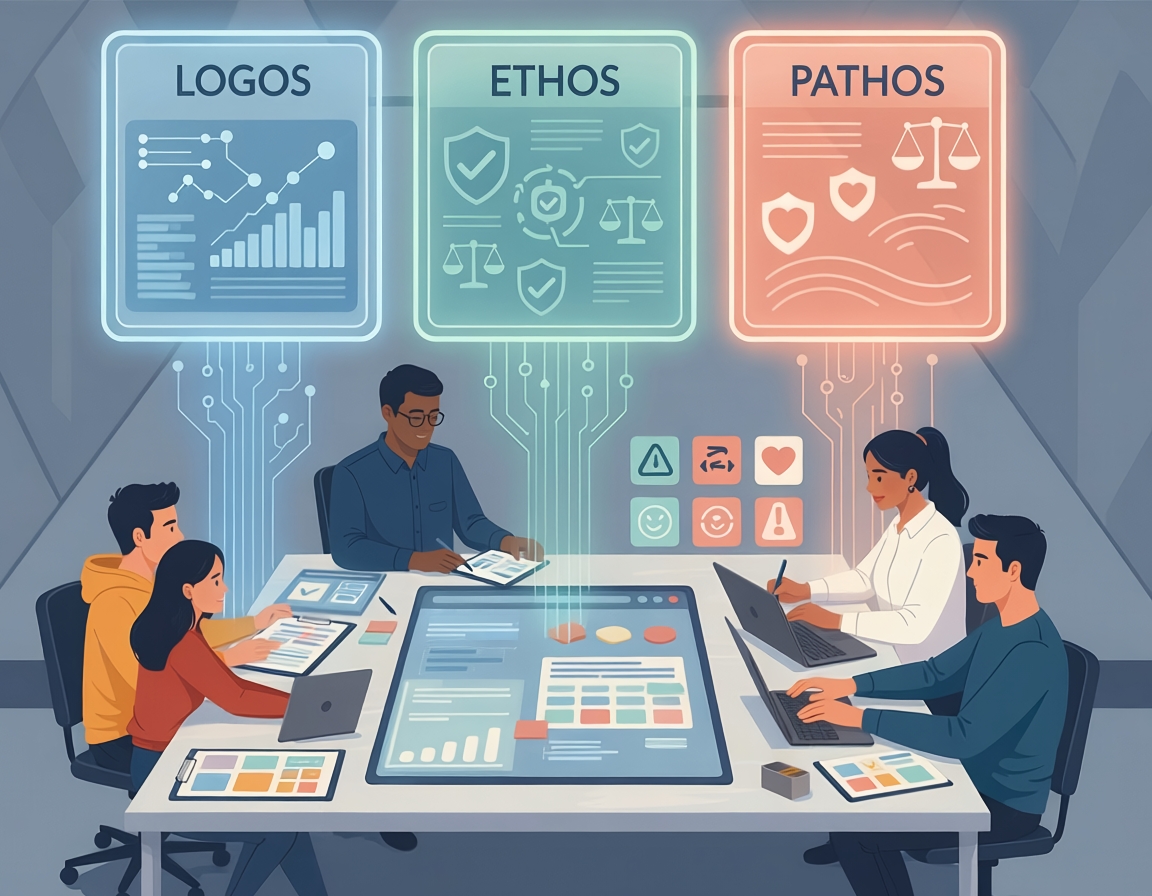
The Stack Overflow team recently discussed the 'logos, ethos, and pathos' of LLMs – a concept from ancient rhetoric that's surprisingly relevant to crafting stellar frontend experiences. As frontend engineers, we often feel like the last line of defense, taking whatever comes back from the backend or an external API and making it presentable. But with LLMs, their 'persona' directly impacts our UI, UX, and even accessibility. Ignoring these aspects is a recipe for user frustration and endless debugging cycles.
Logos: The Cold, Hard Facts (and the Lack Thereof)
Think of 'logos' as the factual correctness, logical coherence, and objective information your LLM generates. A hallucination isn't just a wrong answer; it's a broken promise to the user, a potential data integrity nightmare for your React components. If your LLM spits out malformed JSON, inconsistent data structures, or outright false information, your UI breaks, your error boundaries light up, and user trust plummets. We're not just calling await fetch() and rendering; we need to validate the data that comes back, especially from a generative model. Unreliable logos means more client-side validation, more fallback UIs, and ultimately, a slower, buggier experience.
Ethos: Character, Credibility, and Bias
This is about the LLM's character and credibility. Does your LLM sound authoritative but not condescending? Is it unbiased? An LLM with poor 'ethos' might generate subtly biased responses, use exclusionary language, or have an inconsistent tone that jars the user experience. For accessibility, this is huge. We need outputs that are clear, respectful, and universally understandable, not just technically correct. If the model's 'voice' is erratic or untrustworthy, users will disengage. It’s about building a consistent, trustworthy voice for your app, not just a chatbot that occasionally sounds like a marketing intern and then a grumpy professor.
Pathos: The Emotional Connection
Finally, 'pathos' is the emotional connection. Does your LLM understand the user's sentiment? Can it offer empathy when needed, or be concise when urgency demands it? An LLM lacking 'pathos' might give a bland, robotic response to a user expressing frustration, leading to disengagement. This isn't about making your app overtly emotional, but about ensuring the interaction feels human and helpful, not just transactional. It's the difference between a user feeling heard versus feeling like they're talking to a brick wall. A poorly managed 'pathos' can lead to poor user retention and a perception of an unhelpful, unintelligent system.
Why it Matters for Frontend Devs NOW
As frontend engineers, we're the last line of defense before the user. We can't just throw LLM output onto the DOM and hope for the best. Understanding logos, ethos, and pathos means better prompt engineering, more robust error handling, and designing UIs that anticipate diverse LLM behaviors. It's about proactive UX and DX, avoiding late-stage bugs, and building truly user-centric AI features. This isn't just academic; it directly impacts your Core Web Vitals if your LLM is slow to generate helpful content, or if its output requires heavy client-side processing to fix. It means less time debugging why your Next.js page looks weird because of an unexpected LLM response, and more time building delightful features.
So, next time you're integrating an LLM, don't just think about what it says. Think about how it says it, who it sounds like, and how it makes your users feel. It’s not just about the API; it’s about the entire user journey, from prompt to pixel.