A Quick Note on the OpenClaw SSRF Issue and Why Webhooks Deserve More Attention
I ran into the OpenClaw SSRF advisory (GHSA-w45g-5746-x9fp) earlier today.
If you're using openclaw versions <= 2026.2.17, the immediate step is simple: update. No debate there.
But while reading through the advisory, something stood out to me. The bug itself isn't particularly exotic. It's a fairly classic SSRF scenario in webhook delivery. The interesting part is how common this pattern actually is across modern systems.
A lot of platforms—including ones I've worked on—have features that accept a URL and then later make a request to that URL.
- Webhooks
- Avatar fetching
- Link previews
- Integrations
- Scheduled callbacks … it shows up everywhere.
And that’s exactly where SSRF tends to creep in.
What Actually Happens in an SSRF Scenario
SSRF can sound abstract if you haven't seen it play out before. In practice, it's usually much simpler than people expect.
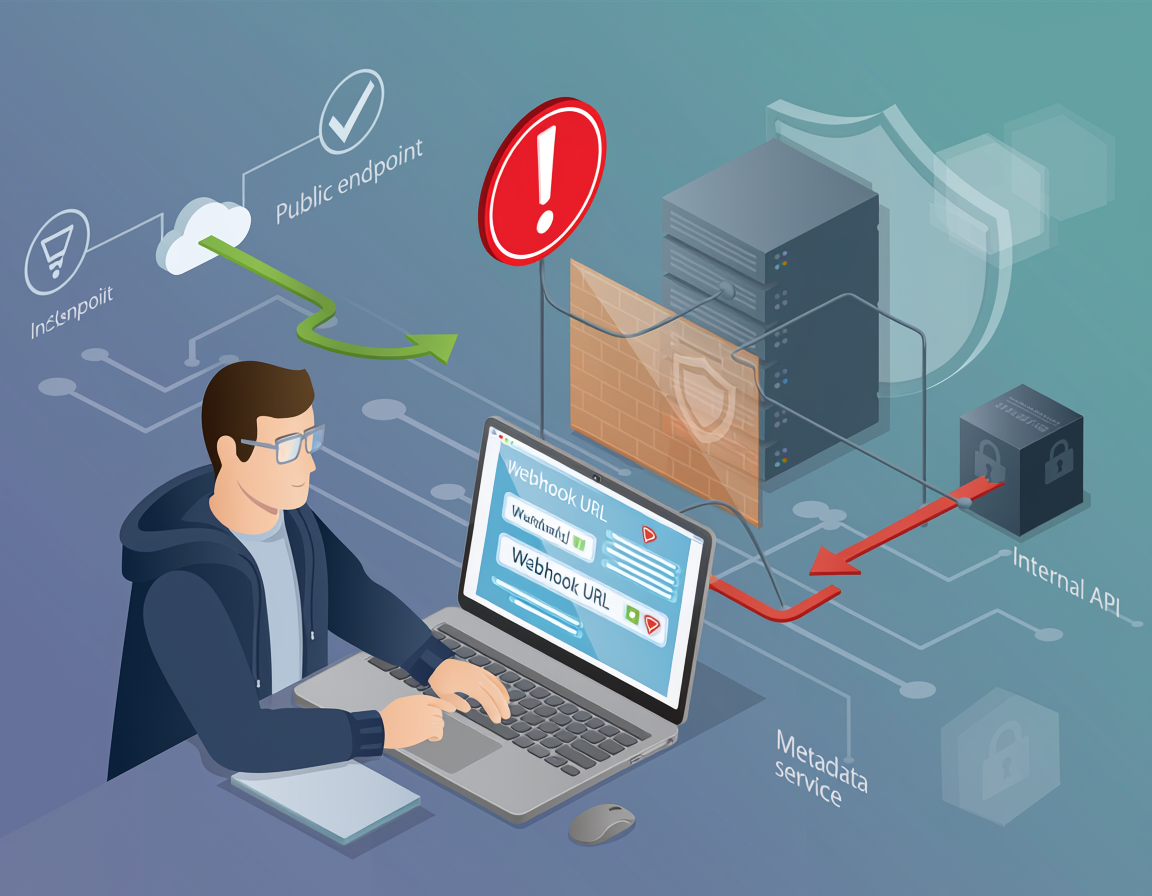
You give the system a URL. The system later makes a request to that URL. If the URL isn't properly validated or restricted, you've effectively given someone a way to make your server send arbitrary HTTP requests.
And the problem is that your server can usually reach things attackers cannot.
Things like:
- Internal microservices
- Admin dashboards
- Staging environments
- Cloud metadata endpoints
Once the server becomes the one making the request, network boundaries start to matter a lot less.
This is especially risky in cloud environments. Metadata endpoints are a well-known target because they can expose credentials if they're not protected correctly.
Why Webhooks Are a Common Source of This Problem
Webhook systems are everywhere now.
They're simple to implement and incredibly useful for integrations. But they also introduce a small but important trust boundary: you're storing a URL that someone else provided and later calling it from your infrastructure.
- Sometimes that URL is user-provided.
- Sometimes it’s configured through an admin UI.
- Sometimes it's part of an integration someone set up months ago and nobody has looked at since.
All of those are potential SSRF entry points if the system isn't careful about how it handles outbound requests.
The OpenClaw case involved cron-based webhook delivery, which adds another interesting angle. Background workers and scheduled tasks often run in environments that have broader network access than public-facing services.
So if something goes wrong there, the blast radius can be larger than expected.
A Few Things I Usually Double-Check in Systems Like This
When SSRF issues pop up in the ecosystem, I usually take it as a reminder to check a few things in our own systems.
Not because we expect a problem, but because these bugs tend to hide in boring infrastructure code.
Some of the questions I typically start with:
-
Are outbound requests restricted? If a service only needs to talk to a few domains, it shouldn't be able to talk to the entire internet—or the internal network.
-
Can the service reach internal infrastructure? Webhook delivery services probably don't need access to databases or admin panels.
-
How are URLs validated? Regex checks alone usually aren't enough. Proper URL parsing and checks against internal IP ranges help a lot.
-
What permissions do background workers have? It's surprisingly common for cron jobs to accumulate more privileges than they really need.
None of these are particularly complicated fixes. The challenge is remembering to apply them consistently.
The Real Lesson Here
The OpenClaw patch solves the immediate issue, which is good.
But the broader takeaway is that any feature that accepts a URL and later makes a request to it should probably get a second look during security reviews.
Inbound security (auth, API validation, rate limits) gets most of the attention. Outbound behavior often doesn't.
But from an attacker's perspective, turning your infrastructure into a request proxy can be incredibly valuable.
And the code paths that enable that are often hiding in places like webhook handlers, background workers, or integration systems—exactly the kind of components people rarely revisit once they’re working.