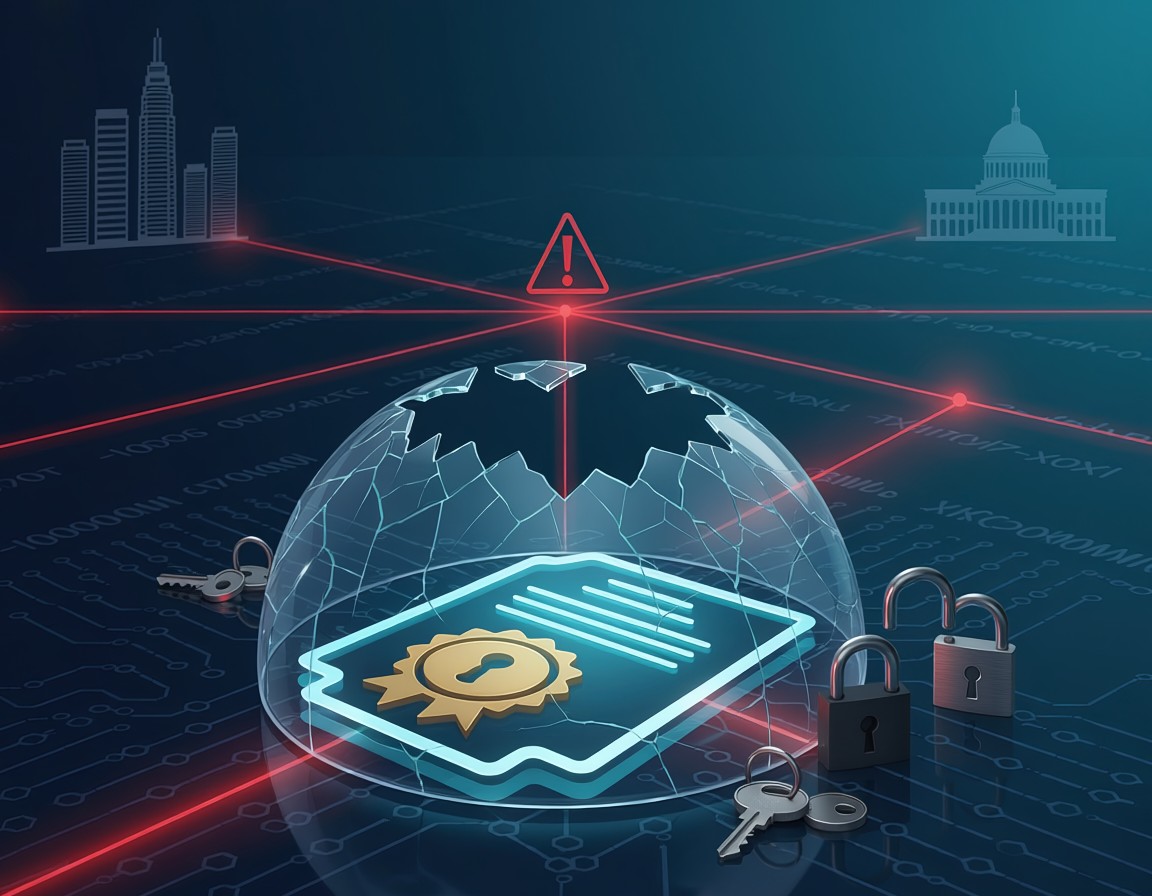
The Silent Killers of Trust: When 900+ Certificates and Private Keys Go Rogue
Why Should I Care? Because Trust is the Foundation of Everything
Just imagine this for a second: your passport could be easily forged, or some bad actor could sign official documents in your name, making them look perfectly legitimate. That's pretty much the digital nightmare we're staring at right now, and it's all thanks to some truly alarming news: over 900 digital certificates, some belonging to Fortune 500 companies and even governments, have been exposed. Their private keys, it turns out, leaked out.
This isn't just some niche headline for security researchers, either. No, this is a blaring siren for anyone and everyone who builds, deploys, and maintains software. Certificates and their private keys? They're the absolute bedrock of digital trust. They're what confirm who's who, encrypt our chats, and make sure the software we download hasn't been tampered with. When those keys get out, that trust just shatters. It leaves a giant, gaping hole for impersonation, data interception, and widespread compromise. And yeah, it's totally a developer problem because, more often than not, we're the ones managing – or, let's be honest, mismanaging – these critical pieces.
The Digital Identity Crisis: What Exactly Leaked?
Let's get straight to it. When we say "certificates," we're usually talking about X.509 digital certificates. These are, at their core, a public key, an identity (think a domain name or company name), and a signature from a trusted Certificate Authority (CA). But the real trick, and the real danger, actually lies in the private key that pairs up with the public key embedded in that certificate.
Here's a way to think about it: your driver's license is the certificate – it proves to others who you are. The private key? That's like your unique biometric data, the secure chip, or that secret phrase only you know. It's what truly proves you're the real owner of that license. If someone gets their hands on your private key, they don't just have a copy of your license. No, they can literally become you. They can sign documents in your name, waltz into protected areas as you, and essentially impersonate your entire digital identity. That's why a leaked private key is a total, utter, no-good disaster.
These keys are absolutely everywhere: they secure HTTPS traffic (TLS/SSL), authenticate APIs, sign code, encrypt sensitive data, and even verify IoT devices. So, when over 900 of them get loose, a huge chunk of our digital world suddenly finds itself wide open to impersonation and attack.
How Do These Crown Jewels Escape? The Anatomy of a Key Leak
Forget the Hollywood hacker in a dimly lit room, pulling off some impossible heist. More often than not, it's an oversight, a simple misconfiguration, or just a plain lack of awareness. As developers, we're right there on the front lines. Understanding how these leaks happen is the first, most crucial step to actually stopping them.
-
The Classic: Hardcoding and Source Control Bloopers. We've all seen it, or maybe, regrettably, even done it. A private key, an API token, or a database credential accidentally gets committed to a public (or even a private, but poorly secured) Git repository. Tools like GitGuardian and TruffleHog exist precisely because this is such a common slip-up. Once it's in Git history, it's incredibly tough, if not impossible, to fully erase.
-
Misconfigured Secrets Management. The irony here really, really stings. We adopt fantastic tools like HashiCorp Vault, AWS Secrets Manager, Azure Key Vault, or GCP Secret Manager, but then, oops, we mess up the configuration. Overly broad IAM policies, weak access controls, or simply forgetting to rotate root keys can turn a powerful security solution into a major weak point.
-
CI/CD Pipeline Vulnerabilities. Our automated build and deployment pipelines? They're often a goldmine of secrets. Keys might show up in logs, get passed as insecure environment variables, or even temporarily sit in insecure build artifacts. A compromised build agent or a pipeline that isn't locked down can expose everything.
-
Human Error and Lack of Awareness. Sometimes, honestly, it's really that simple. A developer copies a key to an unsecured local machine, sends it over an unencrypted channel, or just genuinely doesn't grasp how serious these things are. Education is absolutely, unequivocally key here.
-
Supply Chain Attacks. This is a growing, gnawing worry. If a third-party library, tool, or even a dependency in your build chain gets compromised, it could potentially sneak keys right out of your build environment or deployed applications.
-
Poor Decommissioning. Keys don't last forever, you know. When a certificate expires or a key isn't needed anymore, it needs to be securely retired and, if it was ever compromised, immediately revoked with the Certificate Authority. Leaving old, vulnerable keys just lying around is simply asking for trouble.
The Domino Effect: What Happens When a Private Key Goes Rogue?
Once a private key leaks, the fallout can be absolutely severe, spreading far and wide:
- Impersonation and Man-in-the-Middle (MITM) Attacks: An attacker can use the private key to impersonate a legitimate website or API endpoint, then intercept and decrypt communications everyone thought were secure. Imagine logging into your bank, only to find out you're actually talking to an attacker's server.
- Data Decryption: If the key was used to encrypt data (and not just for secure transport), then any data encrypted with the corresponding public key could be easily decrypted by the attacker.
- Code Signing Forgery: Malicious software can be signed with a legitimate company's certificate, making it look completely trustworthy and allowing it to bypass security checks.
- API Compromise: Attackers can authenticate to critical services, gaining unauthorized access to data or manipulating systems, all while appearing to be a perfectly legitimate service.
- Reputational Damage and Trust Erosion: Beyond the immediate technical hit, the long-term damage to a company's reputation and customer trust can be absolutely enormous and incredibly hard to recover from.
Building a Fort Knox: Practical Steps for Developers
This isn't just a CISO's headache, by the way; it's very much a developer's challenge. So here's what we, as the actual builders of the digital world, can do:
-
Treat Keys like Nuclear Launch Codes. No, this isn't hyperbole, seriously. Get everyone thinking that private keys are the absolute most sensitive things you'll ever handle. A human should never, ever see, copy, or store them insecurely.
-
Adopt Solid Secrets Management Platforms. For any serious project, this is absolutely non-negotiable. Tools like HashiCorp Vault, AWS Secrets Manager, Azure Key Vault, or GCP Secret Manager offer a centralized, secure, and auditable way to store, access, and rotate secrets – exactly what you need. They plug right into your applications and CI/CD pipelines, meaning developers never have to directly touch raw keys.
-
Automate Key Rotation. Don't wait for a breach to happen – that's just asking for trouble. Set up regular, automated rotation for all critical keys and certificates. If a key does get compromised, the window of opportunity for an attacker shrinks dramatically.
-
Principle of Least Privilege. Grant access to secrets only when it's absolutely necessary, and only for as long as it's truly needed. If a service needs a key for just 10 minutes to do a task, it should only have access for those 10 minutes, full stop – not forever.
-
Secure Your CI/CD Pipelines.
- Never Hardcode: This should be your absolute golden rule. No secrets in source code. Ever.
- Integrate Secrets Managers: Your pipelines should pull secrets directly from your secrets management platform, not from environment variables that might get logged or from files just sitting on the build agent.
- Review Logs: Double-check, then triple-check, that secrets are never exposed in build logs.
- Scan Artifacts: Put checks in place to make sure secrets aren't accidentally bundled into your deployment artifacts.
-
Static Analysis and Secret Scanning. Integrate tools like GitGuardian, TruffleHog, Snyk, or even custom regex checks right into your pre-commit hooks and CI/CD pipelines. These tools can automatically spot if a secret has been accidentally committed to your repository and stop it dead in its tracks from ever going public.
-
Education and Awareness. Build a security-first mindset within your team – it's crucial. Regular training, code reviews specifically looking for secret management issues, and open discussions about security best practices are incredibly valuable, truly.
The Uncomfortable Truth: It's an Ongoing Battle
In our fast-changing digital landscape, new vulnerabilities pop up practically every single day. The fact that even Fortune 500 companies and governments are vulnerable to these kinds of leaks just goes to show that no one, absolutely no one, is truly immune. It's an uncomfortable truth, but a necessary one we all need to face: security isn't a destination; it's a continuous journey. We, as developers, are a massive part of this journey. By really living DevSecOps principles and "shifting security left," we can build far stronger systems right from the start.
Our Shared Responsibility in a Fragile Digital World
The recent certificate leaks are a stark, sobering reminder of just how fragile digital trust really is. As developers, we wield immense power – and with it, immense responsibility – in protecting that trust. By understanding how these leaks happen, putting solid security practices in place, and fostering a culture of constant vigilance, we can collectively strengthen the digital foundations our world runs on. Let's make absolutely sure our code isn't the next headline for a security breach.
한글 요약
최근 포춘 500대 기업과 정부 기관들까지 사용하는 900개 이상의 디지털 인증서가 개인 키 유출로 노출되었다는 소식이 들려왔죠. 이 글에서는 이런 유출이 왜 그렇게 치명적인지, 주로 어떻게 발생하는지, 그리고 개발자들이 이러한 중요한 디지털 자산을 보호하기 위해 어떤 실질적인 조치들을 취할 수 있는지 자세히 살펴봅니다. 특히 강력한 비밀 관리 시스템과 보안을 최우선으로 생각하는 사고방식이 얼마나 중요한지 강조하고 있습니다.